
Triangle Nails, Explained: The Bold Shape Everyone’s Suddenly Asking About
Scroll through nail inspo long enough and you’ll eventually hit…
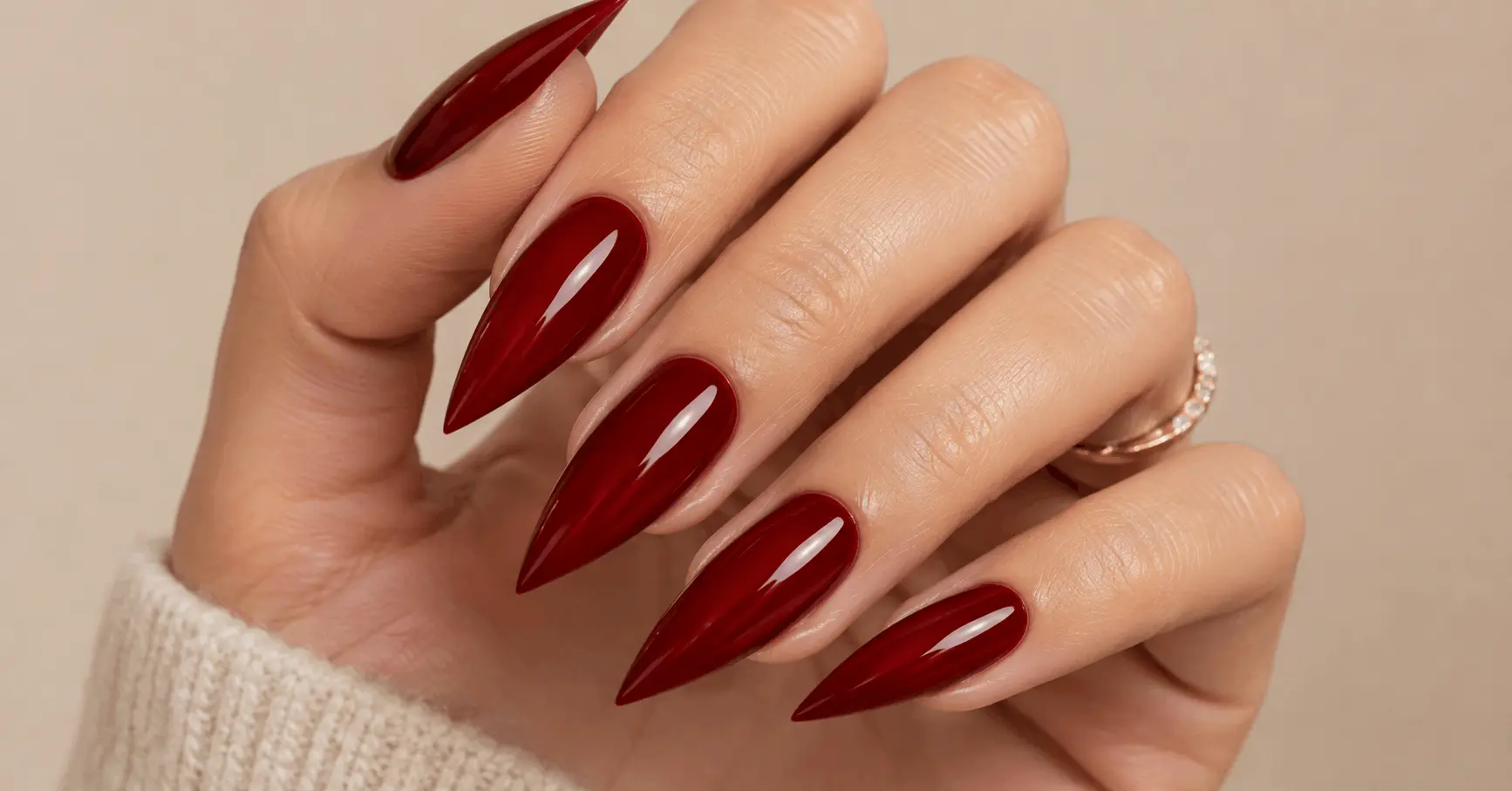
Scroll through nail inspo long enough and you’ll eventually hit a set that looks almost architectural sharp angles, a clean point, edges you could practically use as a straightedge.
That’s the “triangle nail” everyone keeps asking about, and if you’ve been Googling what it’s actually called or whether your nail tech can even do it, you’re not alone. It’s one of those shapes that looks intimidating in photos and turns out to be much more approachable once you understand what’s really going on underneath it.
We get asked about this shape a lot, so let’s clear up the terminology, talk about how it stacks up against the shapes you already know, and be honest about what a sharper point means for your nail health.
Key takeaways
- “Triangle nails” usually refers to the arrowhead or lipstick shape a nail with sharp angled sides that taper to a point or flat edge.
- It’s a cousin of the stiletto shape, not a totally separate category same sharp energy, different tip.
- Rounder, squarer shapes (square, squoval, almond) tend to hold up better day-to-day than very pointed ones.
- A concave or spoon-shaped nail bed is a different thing entirely and is sometimes worth mentioning to a doctor, not just your nail tech.
- The sharper the shape, the more it depends on healthy length and a skilled file DIY is doable, but go slow.
So What Are Triangle-Shaped Nails Actually Called?

Here’s the thing about “triangle nails” it’s a description, not really an official shape name. When people search for it, they’re usually picturing one of two looks:
- Arrowhead nails, where the sides taper evenly to a sharp central point, like a tiny dagger.
- Lipstick nails, where the tip is sliced at an angle instead of a point imagine the flat, slanted edge of a lipstick bullet.
Both live in the same neighborhood as the classic stiletto shape, just with sharper, more geometric lines. If your nail tech looks at a photo and says “oh, you mean arrowhead,” that’s not them correcting you it’s just the more precise name for the look you’re after.
And for context, this sits within a much bigger shape family: square, round, oval, almond, coffin (also called ballerina), squoval, and stiletto. Triangle-style nails are really the pointier, more editorial sibling of that lineup striking, a little bit fashion-forward, and best suited to someone who wants their manicure to make a statement.
Is a Sharper Shape the “Healthiest” One?
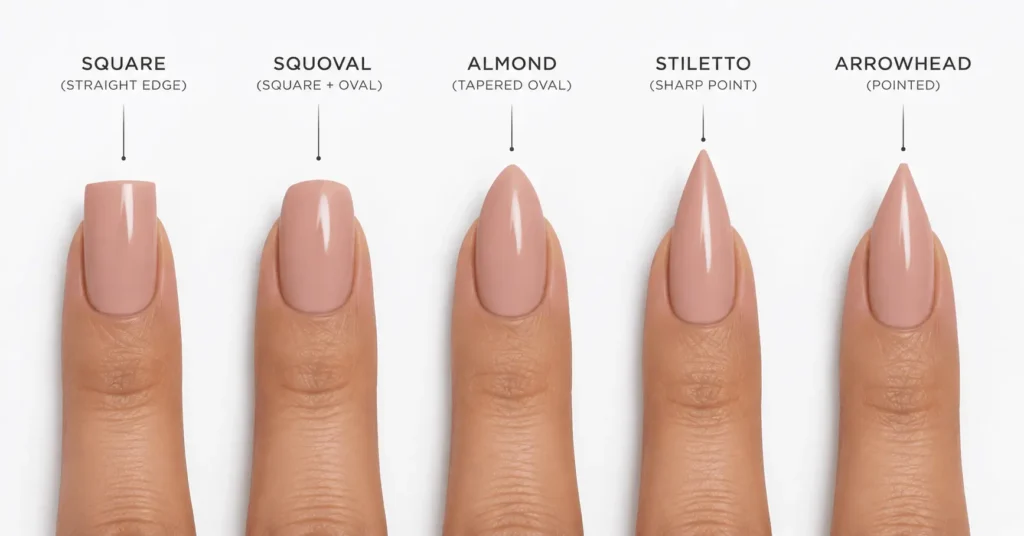
Short answer: not usually, and that’s worth knowing before you commit. Nail health experts generally point to square, squoval, or soft round shapes as the most durable, simply because a wider, flatter free edge distributes everyday pressure more evenly.
Every time you type, open a jar, or zip up a jacket, a very sharp point takes that stress on a tiny surface area which is exactly why pointed shapes chip or snap more easily than rounder ones.
That doesn’t mean you should skip the look. It just means going in with realistic expectations: shorter length, slightly more file maintenance, and a gel or hard-gel overlay if you want the point to actually survive your week.
What People Mean by “Concave” or “Spoon” Nails
This one trips people up, because it sounds related to triangle nails but really isn’t. A concave or “spoon” nail (the clinical term is koilonychia) curves inward instead of outward, almost like a tiny bowl.
It’s not a style choice it’s a nail bed change that’s sometimes linked to iron deficiency or other underlying health factors. If you notice your nails genuinely spooning inward rather than just being shaped that way by a file, that’s a conversation for a doctor, not a nail tech, and it’s worth mentioning to them rather than trying to diagnose it yourself.
Getting the Look Without Wrecking Your Nails
If you’re ready to try it, a few things make the difference between a triangle manicure that lasts and one you’re repairing by Wednesday:
- Start with length. A sharper point needs a bit more free edge to work with than a round or square shape does too short and there’s nothing to taper.
- File in one direction. Sawing back and forth weakens the nail plate right at the point, which is exactly where you don’t want weakness.
- Consider a gel overlay. Natural nails can absolutely pull off this shape, but a gel or hard-gel structure gives the tip real reinforcement.
- Keep a glass file in your bag. Small chips at a sharp tip can snag on things fast a quick smooth-over prevents a full break.
- Ask for it by name at the salon. Bring a photo and say “arrowhead” or “lipstick shape” so your tech knows exactly which angle you want.
Honestly, this is one of those shapes where a professional first attempt is worth it, even if you plan to maintain it yourself afterward. Getting the initial taper even on both hands is fiddly, and a tech doing this daily will get you there faster than a few solo tries with a nail file at your kitchen table.
Frequently Asked Questions
What is the pointy nail shape called?
Most of the time it’s stiletto or arrowhead, depending on how sharp the taper is. Stiletto keeps a longer, dagger-like point along the whole nail; arrowhead brings the sides in more abruptly to a shorter, sharper tip which is usually what people mean by “triangle nails.”
What nail shape is healthiest?
Square, squoval, or soft round shapes tend to hold up best day-to-day, since a wider free edge spreads out everyday pressure instead of concentrating it at one sharp point. Pointed shapes like arrowhead or stiletto can still be worn safely they just chip more easily and need more upkeep.
How much should I tip for a $40 manicure?
Standard etiquette in the US is 15–20% of the service total, so that works out to roughly $6–$8 on a $40 manicure. Tip toward the higher end if your tech nailed a tricky shape or design.
Is it rude not to tip your nail tech?
It’s not illegal or contractual, but it does go against standard practice tipping is the norm in most US salons, and skipping it without a service issue can come across as an oversight rather than a neutral choice. If something genuinely went wrong, that’s worth mentioning to the salon directly rather than just leaving nothing.