
Shellac Nails vs. Gel: What’s Actually Different?
Ask ten people what “shellac nails” actually means and you’ll…

Ask ten people what “shellac nails” actually means and you’ll probably get ten slightly different answers. Some will tell you it’s just a fancier word for gel. Others swear it’s stronger, shinier, or somehow better for your natural nails. And somewhere in there, someone will ask the question that stops the conversation cold: wait, isn’t shellac made from bugs?
That last one is actually a great place to start, because the answer is more interesting than a simple yes or no, and it explains a lot of the confusion around this term in the first place.
Key Takeaways
- Real shellac resin is a natural substance secreted by the lac insect, historically used in varnish, wood finishing, and even some food glazes, but the “shellac manicure” you book at a salon contains none of it.
- “Shellac” as a nail term comes from CND Shellac, a trademarked brand name for a specific soak-off gel-polish hybrid, similar to how “Kleenex” became shorthand for tissues generally.
- A shellac-style manicure blends gel durability with traditional lacquer shine, applied and cured in thin layers under a lamp, distinct from a straight gel polish or acrylic system.
- Neither shellac nor gel is universally “healthier”; proper application and, especially, proper removal matter more than which product category you choose.
- Removing either at home safely means soaking, not peeling or prying, regardless of which one you’re wearing.
Wait, Is Shellac Actually Made From Bugs?
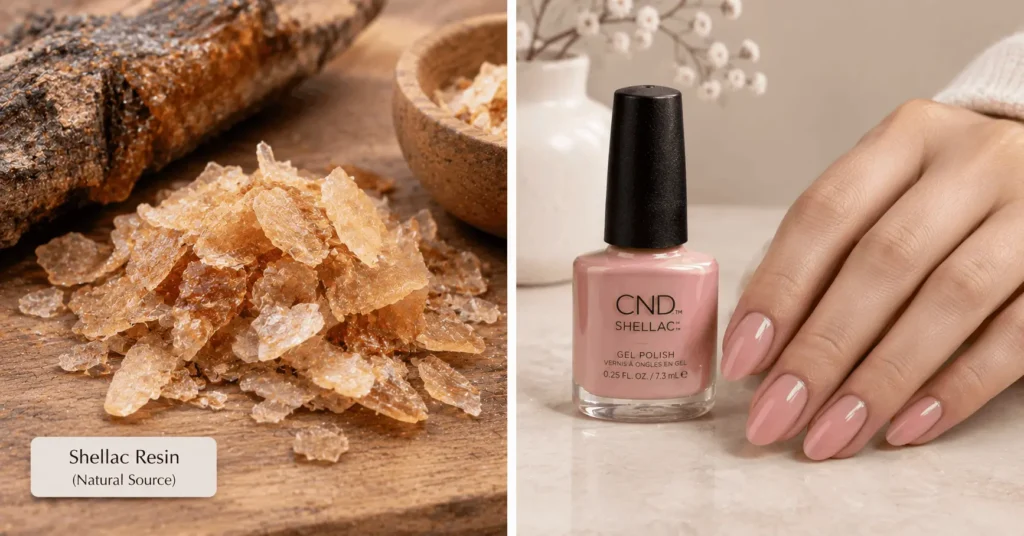
The short answer: Real shellac resin, yes. Your salon “shellac manicure,” no.
Here’s the genuinely interesting part. Shellac is a real, natural resin that’s been used by humans for centuries, secreted by the female lac insect and traditionally processed into flakes, then dissolved in alcohol to create varnish, wood sealant, and even certain food glazes and coatings. It’s a real material with a real history, entirely separate from your manicure.
What most people mean by “shellac nails” traces back to CND Shellac, a trademarked brand name for a specific soak-off gel-polish hybrid that Creative Nail Design launched years ago.
It contains no actual shellac resin at all. The name caught on so widely that it became a generic stand-in for an entire category of product, the same way “Kleenex” gets used for tissues or “Band-Aid” for adhesive bandages, regardless of the actual brand on the shelf.
So What Is a “Shellac” Manicure, Really?
Strip away the branding confusion and a shellac-style manicure is a hybrid product: part gel, part traditional nail lacquer, applied in thin layers and cured under a UV or LED lamp between coats, similar to a standard gel manicure.
The lacquer component is what gives it that particular glassy shine and smooth application feel, while the gel component provides the durability and chip resistance gel manicures are known for.
In practice, most nail techs today use “shellac” loosely to describe this style of soak-off gel-hybrid polish regardless of which specific brand is on the shelf, which is exactly why “shellac vs. gel” as a question can get a little slippery. You’re often comparing two things that overlap more than they differ.
Shellac vs. Gel: A Side-by-Side Look
| Factor | Shellac-Style Hybrid | Standard Gel Polish |
|---|---|---|
| Formula | Gel and lacquer hybrid | Pure gel formula |
| Curing | UV or LED lamp, layer by layer | UV or LED lamp, layer by layer |
| Typical durability | Up to 2-3 weeks | 2-3 weeks, brand-dependent |
| Removal process | Soaks off, often described as gentler | Soaks off, technique-dependent |
| Shine finish | High-gloss, lacquer-like | Glossy, can vary by brand/topcoat |
| Cost | Often slightly higher, brand-dependent | Varies widely by salon and brand |
| Best for | Natural nail color with extra shine and wear | Color and durability on natural nails or over extensions |
Worth being upfront about: some of the “gentler removal” and “no nail damage” claims tied to specific shellac brands come from that brand’s own marketing, not independent testing. That doesn’t mean they’re wrong, hybrid formulas genuinely can behave differently, but it’s worth treating brand-specific performance claims with a healthy dose of the same skepticism you’d apply to any product marketing.
Which Is Actually Healthier for Your Nails?
Neither wins outright. What actually determines the health impact, for either option, comes down to two things: how much filing or buffing the natural nail undergoes during application, and whether removal is done properly.
Aggressive filing before application and peeling or prying during removal are what cause thinning and damage, regardless of whether the product in the bottle is labeled gel or shellac.
If you’re chasing the gentlest possible option specifically, ask your salon which of their products require the least natural nail prep and always insist on a proper soak-off removal rather than a quick scrape-and-go, whichever product you choose. For a broader look at nail health across enhancement types generally, our full set cost and safety guide covers this in more depth.
Is It a Good Option for Aging Nails?
Aging nails often become more brittle, ridged, or slow-growing, which makes minimal-prep, gentle-removal products genuinely appealing. A shellac-style hybrid, applied without heavy filing and removed by proper soaking, tends to be a reasonable choice for this reason.
That said, nail changes in older adults can sometimes signal something worth a doctor’s attention rather than just a cosmetic concern, so if you’ve noticed sudden changes in texture, thickness, or color, it’s worth mentioning to a physician rather than just choosing a gentler polish and moving on.
Can You Remove Shellac at Home Safely?
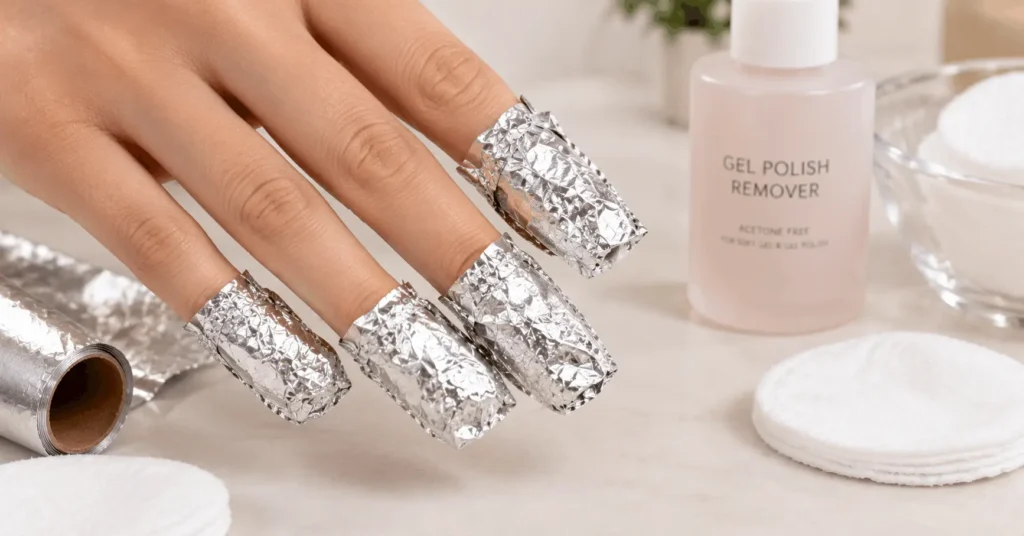
Yes, with the same core rule that applies to gel: soak, don’t peel. The standard safe method is to soak a cotton pad in acetone, place it directly on the nail, and wrap the fingertip in foil for roughly ten to fifteen minutes to let the acetone fully break down the coating before gently pushing it off, never scraping or prying.
Regular non-acetone polish remover generally won’t fully dissolve a gel-hybrid coating, which is why people who try it often end up frustrated and reach for a metal tool instead, which is exactly the habit that damages the natural nail underneath.
Why Did People “Stop” Using Shellac?
Honestly, they didn’t, not entirely. What actually happened is that the nail industry diversified. Dip powder, Gel-X, and various builder-gel systems all emerged as competing options over the years each offering their own combination of durability, application speed, and finish.
Shellac-style hybrids remain widely available and popular; they’ve just gone from being the dominant new thing to one strong option among several, which naturally makes it feel less ubiquitous than it did at its peak.
Frequently Asked Questions
Is shellac still made from bugs?
Real shellac resin is, yes, it’s derived from the lac insect. The “shellac manicure” you get at a salon contains none of it; the name comes from a trademarked gel-hybrid polish brand that became a generic term for the category.
Which is better, gel or shellac?
Neither is universally better; they’re more similar than different, both curing under a lamp with comparable durability. The right choice usually comes down to finish preference and what your specific salon’s products perform best.
Is it easier to remove shellac or gel?
Both should be removed the same way: soaked off, not filed or peeled. Some shellac-style formulas are marketed as easier to remove, but proper technique matters more than the product category for avoiding nail damage.
What is the healthiest nail option at a salon?
Natural nails with a gel or shellac-style polish, applied with minimal prep and removed by proper soaking, generally put the least ongoing stress on your nail bed compared to frequent acrylic fills or aggressive removal habits.