
Nails by Design: How to Get Custom Nail Art Done Right
Somewhere between “just paint them red” and a full hand-painted…

Somewhere between “just paint them red” and a full hand-painted mural is where most great manicures actually live: nails designed around you, not pulled off a wall chart. Maybe it’s your wedding colors on your ring finger, a tiny constellation because you’re a summer baby, or your dog’s silhouette because, honestly, why not.
That’s what “nails by design” really means. Art built around an idea you brought in, not a design you picked because it was already sitting in the sample book.
The catch is that custom work only turns out well when there’s a real conversation between you and your tech, and it comes with a different price tag than a standard set. Let’s talk through how to get your idea across clearly, what actually drives the cost up, and how to pick a base that lets your design last.
Key Takeaways
- Custom nail art is priced by time and complexity, not just “how many colors.” Hand-painted detail and 3D elements cost more because they take longer, not because they use pricier polish.
- Bringing clear references (photos, not just descriptions) is the single biggest factor in getting a custom design to actually match what’s in your head.
- Very intricate designs work best on a durable base. Gel or acrylic tends to hold fine detail better than standard polish over two to three weeks.
- Nail shape and length affect what’s realistic; a tiny canvas limits how much detail can actually read clearly.
- Most salons charge for design work separately from the base set, and that’s standard, not an upsell.
What Makes Nail Art “Custom” in the First Place?
Custom work covers a wide range; it doesn’t have to mean an elaborate scene painted across all ten nails. It just means the design is built for your specific idea rather than chosen from a pre-made option. That can look like:
- A meaningful symbol or initial on one or two accent nails
- A color palette matched to a specific event (a wedding, a team color, a favorite outfit)
- Hand-painted illustration: florals, characters, tiny scenes
- 3D elements: charms, gems, sculpted accents that add texture and dimension
The common thread is that it requires your tech to build something specifically for you, which is exactly why the process, and the pricing, works differently than picking a design off a sample wall.
How to Actually Communicate Your Vision
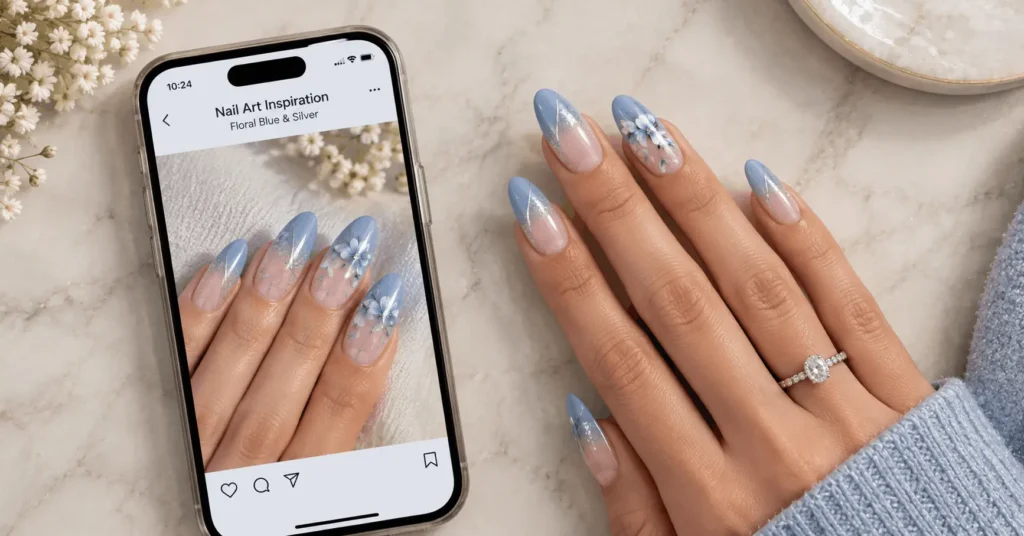
This is the part that makes or breaks a custom set, and it has almost nothing to do with your tech’s skill. It’s about how clearly the idea gets across before they pick up a brush.
- Bring photos, not just words. “Dainty florals” means something different to everyone; a reference photo closes that gap immediately.
- Be specific about placement. Decide up front whether you want the design on every nail or just an accent nail or two, since it changes both the look and the price.
- Talk about scale honestly. A detailed illustration that looks perfect on a phone screen may need real simplification to read clearly on an actual nail. A good tech will tell you this, and it’s worth listening to rather than pushing for every detail.
- Ask what’s realistic in your appointment window. Elaborate 3D or fully hand-painted sets can take considerably longer than a standard appointment slot, so book extra time if your idea is ambitious.
What Actually Drives Custom Pricing Up

Here’s the honest breakdown, since this is one of the most common points of confusion: your base full set is priced on its own, and design work is layered on top as a separate charge. That’s standard practice across the industry, not a sign you’re being overcharged. What specifically moves the price:
- Time, above everything else. A hand-painted design simply takes longer than applying solid color, and pricing generally reflects your tech’s time investment.
- 3D elements, charms, gems, and sculpted accents, tend to sit at the top of the price range since they involve extra materials and careful placement.
- Number of nails involved. One accent nail with detail costs far less than a full custom set across all ten.
- Complexity of the specific design. Fine linework and shading take more time than bold, simple shapes, even at the same size.
If you love the idea of custom art but want to manage cost, ask your tech which one or two nails would carry the most visual impact. A well-placed accent nail often reads just as intentional as a full custom set, for a fraction of the price and time.
Choosing a Base That Lets the Design Actually Last
Detailed art needs a stable surface to sit on, which is where your base product matters. Gel and acrylic generally hold fine detail and color better over two to three weeks than standard polish, which tends to chip and dull art faster.
If your design involves delicate linework or a 3D element, gel or gel-X tends to be the more forgiving choice, since it provides a smoother, more durable surface for the artwork to sit on top of.
That said, the “right” base isn’t only about durability; your nail health matters too, especially if you get custom sets often.
If you’re doing back-to-back appointments with detailed art, it’s worth occasionally choosing a lighter, simpler design on a gel-only base to give your natural nails a break from continuous enhancement wear.
Caring for Custom Work Once You Leave the Salon
Detailed art is more visible when it’s damaged, so a few small habits go a long way: use gloves for cleaning or dishes to protect fine detail from chemical exposure, apply cuticle oil regularly to keep the surrounding skin from drying and cracking near the design, and avoid using your nails as tools. A small chip at the tip is far more noticeable on hand-painted art than on a plain color set.
Frequently Asked Questions
How much does it cost to get designs on your nails?
It depends on complexity and how many nails are involved. Expect a per-nail add-on fee for hand-painted work, with 3D elements and full-hand custom sets sitting at the higher end. Simple accent-nail designs are the most budget-friendly way to get a custom look.
How much do 3D designs on nails cost?
3D elements (charms, gems, sculpted accents) are typically priced per element or per nail, and generally cost more than flat hand-painted designs because of the extra materials and application time involved.
Do nail salons charge for designs?
Yes, almost always. Design work is standard practice as a separate charge from your base full set, reflecting the added time it takes rather than an unusual upsell.
Is it rude to not tip your nail tech?
Generally yes. Tipping (typically 15–20% of the total service, including design add-ons) is standard etiquette, and it’s worth tipping a bit more when a tech spends extra time bringing your custom idea to life.