
Gel-X Nails: What They Are and How They Compare to Acrylic, Gel, and Dip
A few years ago, “gel” and “acrylic” pretty much covered…
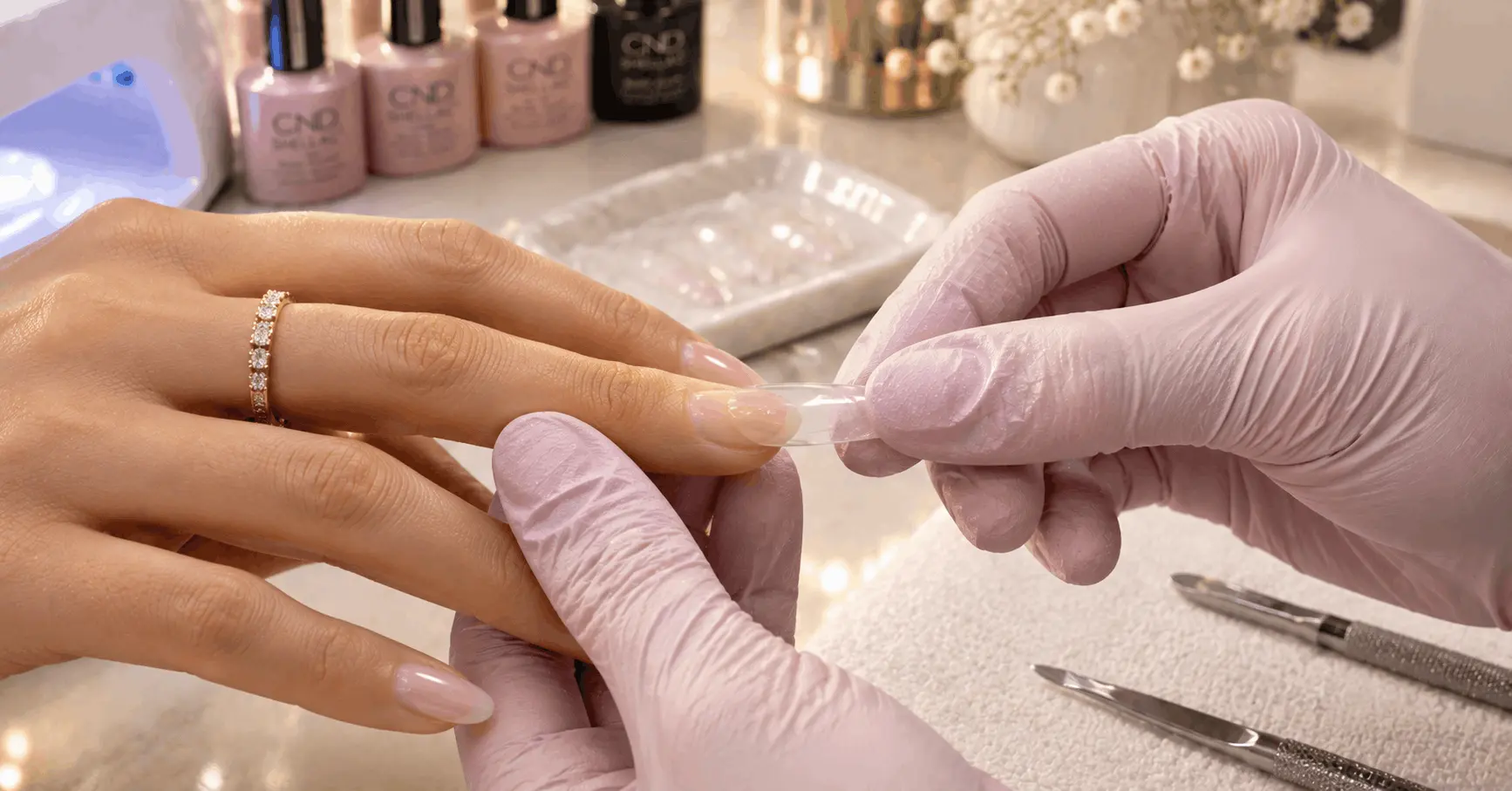
A few years ago, “gel” and “acrylic” pretty much covered every conversation about nail enhancements. Then Gel-X showed up, and suddenly half the people booking appointments were asking for it specifically without necessarily knowing what makes it different from either option they already knew.
If that’s you, you’re not alone, and it’s a fair question. This is a genuinely distinct system, not just a rebrand of gel polish, and knowing how it actually works helps you decide whether it’s the right call for your nails.
Let’s break down what Gel-X actually is, how it stacks up against acrylic, traditional gel, and dip powder, and which one makes the most sense depending on what you’re looking for.
Key Takeaways
- Gel-X uses pre-shaped soft gel tips adhered to your natural nail, then finished with gel polish and cured under a lamp; it’s a distinct system from both regular gel polish and acrylic.
- Gel-X is generally considered gentler on the natural nail than acrylic during both application and removal, since it requires less filing and soaks off rather than needing to be filed or buffed away.
- Acrylic still wins on maximum length and raw durability for very long extensions; Gel-X tends to feel lighter and more natural but isn’t always the strongest option for extreme lengths.
- Dip powder is a separate system entirely, generally comparable in durability to Gel-X, with sanitation (shared powder pots) being the main safety consideration to ask about.
- No option is universally “healthiest”; the right choice depends on what you’re prioritizing: strength, natural feel, low odor, or minimal maintenance.
What Is Gel-X, Exactly?

Gel-X is an extension system built around pre-shaped, flexible soft-gel tips that get sized and adhered to your natural nail, then sealed and shaped with gel polish, cured under a UV or LED lamp just like a standard gel manicure.
That’s the key distinction: unlike traditional gel polish, which sits directly on your natural nail with no added length, Gel-X gives you length and shape without the liquid-and-powder sculpting process that acrylic requires.
Because the tips come pre-formed, your tech spends far less time filing and shaping compared to sculpting acrylic from scratch, which is a big part of why people describe Gel-X as feeling lighter and more natural than acrylic extensions.
Gel-X vs. Acrylic vs. Gel vs. Dip: A Side-by-Side Look
| Factor | Gel-X | Acrylic | Gel Polish | Dip Powder |
|---|---|---|---|---|
| Adds length? | Yes, via pre-shaped tips | Yes, sculpted from liquid + powder | No, applied to natural nail only | Typically no, applied to natural nail |
| Odor during application | Minimal | Strong (liquid monomer) | Minimal | Minimal |
| Typical durability | 3-4 weeks | 3-4+ weeks, holds long lengths well | 2-3 weeks | 2-4 weeks |
| Removal process | Soaks off | Filed down, sometimes soaked | Soaks off | Soaks off |
| Filing required at application | Minimal | More extensive | Minimal | Minimal |
| Feel/weight | Lightweight, flexible | More rigid, heavier at long lengths | Lightest (no extension) | Lightweight |
| Best for | Natural-looking length, shorter soak-off appointments | Maximum length and structural strength | Low-maintenance color, no length | Strength and color without liquid gel |
None of these numbers are exact promises, since your own nail health, how well you care for them between appointments, and your tech’s technique all affect real-world results. But the general pattern holds across most salons.
Is Gel-X Actually Healthier for Your Nails?
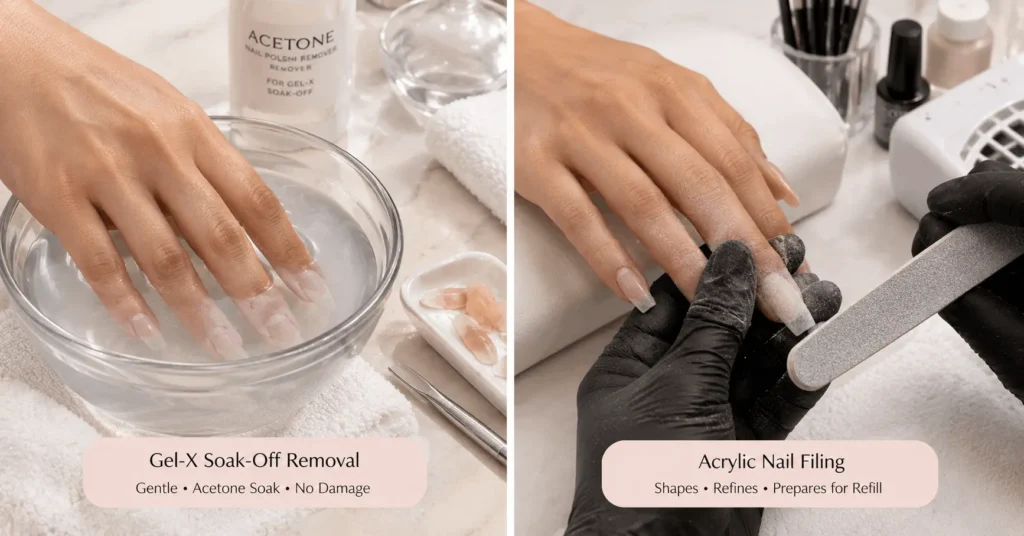
Generally, yes, relative to acrylic specifically, though it’s worth being precise about why. Two things make Gel-X gentler on the natural nail plate: it requires significantly less aggressive filing during application since the tips are pre-shaped, and it soaks off rather than needing to be filed or pried away, which is where a lot of acrylic-related nail damage actually happens. Improper acrylic removal, filing too aggressively or peeling it off, is one of the most common causes of thin, weak nails after repeated wear.
That said, “healthier than acrylic” isn’t the same as “risk-free.” Gel-X still involves adhesive and UV or LED curing like any gel system, and poor application (tips sized incorrectly, insufficient prep) can still cause lifting or damage regardless of the product itself.
For a broader look at nail health considerations across all enhancement types, including who should be extra cautious with gel systems, see our full set cost and safety guide.
What Are the Real Disadvantages of Gel-X?
It’s not a perfect system, and a few honest downsides are worth knowing before you book:
- Cost. Gel-X often runs a bit higher than a standard acrylic set, since the pre-formed tips and technique take a specific skill set.
- Length limitations. While Gel-X can absolutely achieve dramatic length, acrylic still tends to hold very long, sculpted extensions with more structural reliability over time.
- Technique-dependent results. Because the tips need to be sized and blended precisely to your natural nail, an inexperienced tech can produce visible seams or premature lifting more easily than with a well-practiced acrylic application.
- Not universally available. Not every salon carries Gel-X tip systems yet, especially smaller or budget-focused salons that have built their service menu around acrylic and dip.
Gel-X vs. Dip Powder: A Closer Look
Since dip powder comes up constantly in the same conversation, it’s worth a direct comparison. Dip powder is applied by dipping your nail into a colored powder (or brushing it on, in more hygienic setups) and sealing it with an activator, rather than curing under a lamp.
Durability between the two is fairly comparable, generally two to four weeks for both, and neither adds dramatic length the way Gel-X or acrylic can.
The main practical difference to ask about is salon hygiene: dip powder traditionally used a shared pot across clients, which raises a legitimate sanitation question if your salon hasn’t switched to single-use portions or a brush-on method. Gel-X, by contrast, uses individually sized tips per client, which sidesteps that particular concern entirely.
So Which One Should You Actually Choose?
Here’s a quick way to think about it based on what you’re prioritizing:
- Want natural-looking length without the acrylic smell or heavy filing? Gel-X is likely your best fit.
- Want maximum length and don’t mind a stronger odor during application? Acrylic still holds the edge for very long, sculpted extensions.
- Just want color with no length, minimal commitment? Standard gel polish is the simplest option.
- Want strength and color without a lamp, and your salon uses single-use dip portions? Dip powder is a solid, low-odor choice.
If you’re still unsure, ask your tech directly which option they’d recommend for your specific nail condition and lifestyle; a good tech will tell you honestly if your nails need a break from any enhancement entirely before piling on a new one.
Frequently Asked Questions
What is Gel-X?
Gel-X is a nail extension system using pre-shaped soft gel tips adhered to your natural nail, then finished and cured with gel polish, offering length without the liquid-and-powder sculpting process acrylic requires.
Is Gel-X healthier for your nails than acrylic?
Generally yes, since it requires less aggressive filing during application and soaks off rather than needing to be filed away, which is where much of the damage from acrylic removal tends to happen.
Does Gel-X last as long as acrylic?
They’re fairly comparable for most lengths, typically three to four weeks each, though acrylic tends to hold up slightly better for very long, dramatic extensions over time.
What is the downside of gel nails?
Standard gel polish doesn’t add length, and repeated appointments involve regular UV or LED lamp exposure to the surrounding skin, which is worth being mindful of if you’re a frequent client.