
Nail Artist vs. Nail Technician: Who Does the Most Famous Manicures?
Some nail techs build a loyal local clientele over years…

Some nail techs build a loyal local clientele over years of steady, excellent work. A smaller handful build something else entirely: a body of work so recognizable that their name gets tagged in headlines right alongside the celebrity whose hands they were working on.
That second group has quietly redefined what “nail artist” means over the last decade, turning a service most people book on their lunch break into a legitimate art form with its own red-carpet moments.
So what actually separates a nail artist from a nail technician, and who are the people behind the manicures that end up all over your social feed after a big event? Let’s get into both.
Key Takeaways
- “Nail artist” and “nail technician” aren’t strictly regulated titles in most places; the real distinction is usually about focus, with “artist” emphasizing design work and “technician” emphasizing the full service and technique.
- A valid state license is what legally allows someone to perform nail services, regardless of which title they use to describe themselves.
- Celebrity nail artists built their reputations the same way local techs do: through consistent, distinctive work and referrals, just at a bigger scale and with social media accelerating it.
- Kim Kardashian, Ariana Grande, and Beyoncé have each worked with specific, well-documented nail artists known for signature styles.
- You don’t need celebrity clients to build a strong nail art reputation; a clear personal style and a consistent portfolio matter more than fame.
Is There Really a Difference Between “Nail Artist” and “Nail Technician”?

Honestly, not a legal one in most places. Both terms typically describe the same licensed profession; the difference is more about branding and focus than anything official.
Someone who calls themselves a “nail artist” is usually signaling that design work, hand-painted detail, and creative concepts are their specialty, while “nail technician” leans toward the full-service side: shaping, health, application technique, and maintenance.
What actually matters legally is the license itself. Regardless of which title someone uses professionally, performing nail services for paying clients typically requires a state-issued license earned through an approved training program and exam.
If you’re curious about that licensing process, what it costs, and what the career actually pays, we cover that in full in our nail technician career guide.
What Does It Take to Become a Well-Known Nail Artist?
The path looks a lot like it does for any working nail tech at first: get licensed, get skilled, get consistent. What separates the artists who go on to work with major clients tends to be a distinctive, recognizable style plus visibility, usually built through social media, that puts their work in front of the right people.
A stylist, makeup artist, or assistant frequently makes the first introduction to a celebrity client, and from there, word of mouth within that circle does the rest.
It’s also worth noting this isn’t an overnight path. Several of the most recognized names in the industry today spent years building a loyal local or regional client base before a single referral changed the trajectory of their career.
Meet the Artists Behind Some of the Most Recognizable Manicures
Kim Kardashian
Kim Truong, known professionally as @kimkimnails, is widely credited as Kim Kardashian’s regular nail artist, having worked with her for years across red carpet looks, brand launches, and everyday appearances.
Truong built her reputation in Los Angeles nail salons before becoming one of the most sought-after celebrity manicurists in the industry, also known for her work with other high-profile clients.
Ariana Grande
Grande’s manicures have been credited to more than one artist over the years. Natalie Minerva, founder of L.A.’s Nail Swag salon, was known for years as her go-to nail artist and has spoken publicly about Grande’s preference for healthy, natural-looking nails using gel extensions rather than traditional acrylics.
More recently, New York-based nail artist Miki has been credited with creating looks for Grande’s album and music video releases, showing how these professional relationships can evolve over an artist’s career.
Beyoncé
Beyoncé’s nails have been credited to a few different artists over the years, most notably Harlem-based manicurist Lisa Logan, a veteran of the industry known for her work with several major celebrity clients, and Miho Okawara, known for innovative techniques using beads, wire, and 3D elements.
A pattern worth noticing across all three: none of these artists became known overnight, and none of them abandoned strong fundamentals for flashy gimmicks. Their signature styles grew out of genuinely skilled, consistent technique first.
What This Means If You’re Building Your Own Nail Art Career
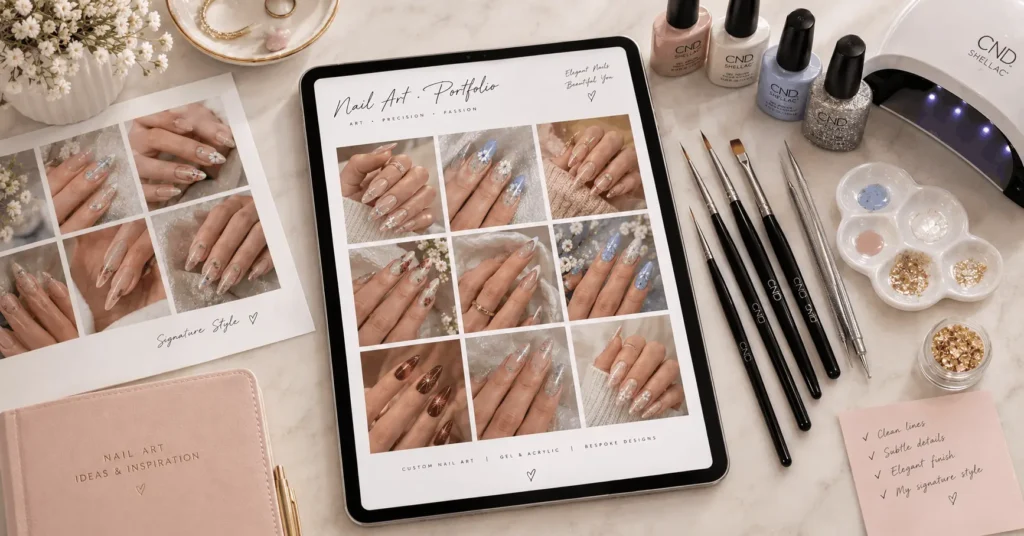
You don’t need a celebrity client to build a meaningful reputation as a nail artist. The through-line in every story above is the same: a clear, consistent personal style, reliable technical skill, and a portfolio that actually represents your best, most repeatable work rather than one-off showpieces.
Building that foundation locally, the same way each of these artists did before their first high-profile client, is what actually gets you noticed, whether that’s by a stylist backstage or by a client scrolling through salon reviews in your city.
Frequently Asked Questions
What is another name for a nail artist?
Common alternatives include manicurist, nail technician, and nail specialist. These terms largely overlap; “nail artist” tends to emphasize creative design work specifically.
Is nails cosmetology or esthetician?
Neither by default. Nail services fall under a dedicated nail technician license in most states, separate from full cosmetology (hair, skin, and nails) and esthetics (skin-focused) licenses, though some professionals hold more than one credential.
What is the healthiest type of nails to get done?
Natural nails with gel polish at a moderate length put the least ongoing stress on your nail bed compared to frequent acrylic fills.
If you love wearing extensions, giving your nails a gel-only break between appointments helps them recover.
How much do I tip for $100 nails?
Standard etiquette is 15–20% of the service total, so roughly $15–$20 on a $100 service, more if detailed art or extra time was involved.